





Satellites Sound the Alarm: Climate Change Reshapes Himalayan Green Cover in Uttarakhand
Dehradun, 11 February 2026: The impact of climate change in Uttarakhand’s Himalayan regions is no longer a matter of speculation—it is now clearly visible in scientific data. A detailed satellite-based study has revealed that over the past nearly 22 years, the nature and pattern of greenery in the Himalayas have undergone significant change. Variations in the color, density, and spread of vegetation across forests, grasslands, and valleys are being seen as a serious warning for the fragile ecological balance of the Himalayas.
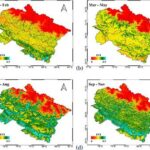
Scientists from the autonomous institute of the Department of Science and Technology, Aryabhatta Research Institute of Observational Sciences (ARIES), Nainital, in collaboration with experts from India and abroad, conducted an in-depth study of vegetation, pollution, and climate impacts in Uttarakhand from 2001 to 2022. The research used the satellite-based global platform Google Earth Engine, enabling simultaneous analysis of long-term datasets.
The study was led by senior ARIES scientist Dr Umesh Chandra Dumka. According to him, indicators such as NDVI (Normalized Difference Vegetation Index) and EVI (Enhanced Vegetation Index) clearly show that greenery peaks after the monsoon, while it declines the most before the monsoon. This pattern, he said, is not merely seasonal but points toward a long-term trend.
Dr. Dumka noted that deforestation, expansion of agricultural land, illegal tree felling, road construction, and rising urban-industrial pollution are among the major drivers of these changes. Alongside this, imbalances in temperature and rainfall are also directly affecting vegetation. Statistical methods such as Pearson correlation were used to understand how climatic factors are influencing green cover.
Scientists have warned that if this trend continues, it could lead to severe loss of biodiversity, depletion of water sources, and serious threats to the livelihoods of communities dependent on rivers. The research has been published in the international journal Environmental Monitoring and Assessment. Researchers believe that satellite science can emerge as an effective early warning system in the future, enabling timely conservation measures and policy decisions to protect the Himalayan environment.